At a busy security checkpoint, operators must examine a steady flow of bags, backpacks, cabin suitcases, and parcels while maintaining consistent inspection standards. The challenge is not simply to produce an X-ray image. It is to provide enough useful visual information for operators to interpret the contents, identify objects that require further attention, and make decisions without creating unnecessary delays.
A single viewing angle may not always show the full arrangement of items inside a densely packed bag. Objects can overlap, and their positions can make visual interpretation more difficult. Dual-view X-ray imaging addresses this challenge by presenting baggage from two viewing angles, giving operators additional information about the contents. When combined with high-definition imaging and AI-assisted detection, this approach can support more informed inspection decisions.
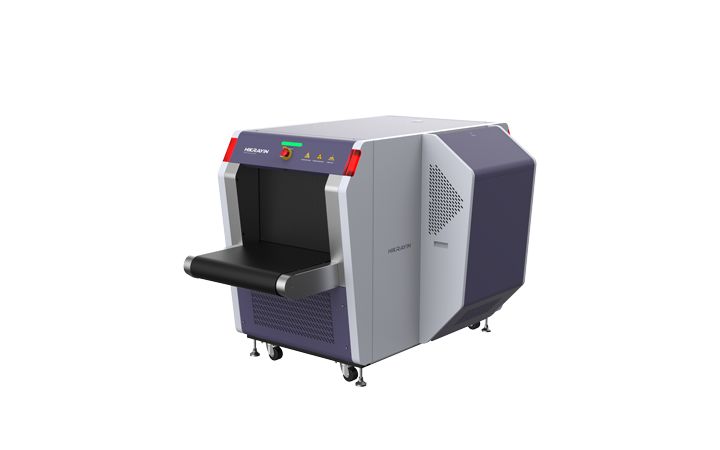
The ISD-CA6040D Dual-Energy Dual-View X-Ray Intelligent Security Inspection System is designed for security checkpoints that handle carry-on luggage, 20-inch cabin suitcases, backpacks, and parcels. Its imaging capabilities, AI detection algorithms, and baggage-image correlation functions make it suitable for applications in customs checkpoints, railway stations, ports, stadiums, and other public venues where reliable baggage inspection is an operational priority.
Baggage is rarely packed in a uniform way. A backpack may contain electronic devices, cables, stationery, clothing, and personal accessories in the same compartment. A cabin suitcase can hold tightly arranged items with different densities and shapes. When these objects overlap in an X-ray image, the resulting projection may make some details difficult to distinguish.
For example, an object positioned behind a larger item may be partially obscured in one view. The operator may need to interpret its outline, density, and relationship to surrounding objects before deciding whether additional inspection is necessary. This requires experience and concentration, especially when the checkpoint is processing many bags.
Dual-view imaging provides another perspective on the same baggage. By showing the contents from two viewing angles, it can help operators assess object arrangement and distinguish features that are less apparent in a single projection. It does not eliminate every imaging limitation, but it gives the operator more information to consider.
This additional perspective is particularly relevant at checkpoints that inspect different types of baggage throughout the day. A consistent imaging approach helps staff work with a wider variety of items without relying entirely on the arrangement visible from one angle.
The main advantage of dual-view imaging is the availability of complementary visual information. Each view represents the contents of a bag from a different direction, allowing operators to compare the appearance and position of objects.
Consider a backpack containing a laptop, charging accessories, and personal belongings. In one view, the laptop may overlap with another dense object. The second view can provide a different projection of their relative positions, helping the operator assess the arrangement more clearly.
The same principle applies to cabin suitcases and parcels with tightly packed contents. Different viewing angles can help clarify object outlines and reduce dependence on a single projection when interpreting a complex image.
In practice, the value of dual-view imaging depends on image quality, system configuration, operator training, and the characteristics of the inspected items. It should be treated as a tool for supporting inspection rather than a guarantee that every concealed object will be identified automatically.
For security managers evaluating inspection equipment, an important question is whether the imaging system gives operators useful information without making the review process unnecessarily complicated. A practical assessment should include representative baggage, common packing arrangements, and the procedures used at the actual checkpoint.
Additional viewing angles are most useful when the resulting images contain sufficient detail for operators to interpret. Image clarity affects how easily they can examine object boundaries, internal structures, and the relationships between items.
The ISD-CA6040D uses advanced X-ray imaging technology and the new-generation RAYTINA HD imaging algorithms to deliver high-definition image quality. This capability is intended to support detailed baggage inspection in operational environments where image interpretation is an important part of the security process.
High-definition imaging can be particularly useful when baggage contains multiple objects with overlapping outlines. Clearer visual information may help operators examine the shapes and relative positions of items before deciding whether an alert requires further review.
However, image quality is only one part of the inspection process. The display configuration, operator experience, baggage orientation, and the physical characteristics of the contents also affect interpretation. A high-definition image should support trained judgment, not replace it.
When assessing an X-ray system, security teams should review images produced from representative bags rather than relying only on general image-quality descriptions. Testing with common luggage types and realistic packing arrangements provides a more useful basis for determining whether the system suits a particular checkpoint.
Reviewing X-ray images requires attention, especially when operators work through a continuous stream of baggage. AI-assisted detection can help by identifying suspected objects and generating alerts for operator review.
The ISD-CA6040D integrates AI detection algorithms powered by the HIKVISION Guanlan Large-Scale AI Models. The system is designed to improve suspected-object detection and reduce false alarms, helping operators focus their attention on images that require closer examination.
AI detection and dual-view imaging serve different but complementary functions. Dual-view imaging provides additional visual perspectives, while the detection algorithm helps flag suspected objects. Operators can then examine the available image information and follow the checkpoint's established inspection procedures.
This distinction matters in real operating environments. An alert is not the same as a confirmed security threat, and an AI system should not be treated as a substitute for the procedures used to resolve uncertain cases. The value of AI-assisted screening depends on how effectively it integrates with operator review and escalation processes.
When evaluating AI detection performance, security teams should consider representative test data, the types of objects the system is intended to detect, the frequency of false alarms, and how alerts are presented to operators. These factors are more informative than relying on a general claim of improved accuracy without defined testing conditions.
Inspection does not end when a bag passes through the scanner. If an event requires further investigation, security personnel may need to identify the relevant baggage image and associate it with the corresponding activity captured by a camera.
The ISD-CA6040D supports baggage-image correlation by linking the X-ray image of the baggage with an image captured by a camera. This function is intended to make event tracing more convenient and accurate.
For checkpoint managers, image correlation can support the review of inspection events by providing an additional visual reference. Instead of treating the X-ray image and camera image as entirely separate records, staff can use the associated information as part of the review process.
This capability may be useful at railway stations, ports, customs facilities, and public venues where several bags pass through the same checkpoint within a short period. Clear association between images can help staff narrow down the relevant event when reviewing an incident or checking a previous inspection.
Implementation details remain important. Operators should understand how the system associates images, how records are retrieved, and how access is managed. Retention periods, user permissions, and data-protection procedures should follow the organization's security policies and applicable regulations.
Imaging features are only part of a successful installation. Before purchasing an X-ray security inspection system, organizations should confirm that its tunnel dimensions, external footprint, electrical requirements, and operating environment match the planned location.
The ISD-CA6040D has a tunnel opening measuring 620 mm wide by 420 mm high. Its external dimensions are 2327 mm long, 1210 mm wide, and 1280 mm high. The tunnel dimensions help buyers assess whether the intended baggage types can pass through the system, while the external dimensions are relevant to floor planning and checkpoint layout.
The stated power consumption is a maximum of 1.3 kW. The system supports 230 VAC or 110 VAC power supplies, with specified voltage and frequency tolerances. Its operating temperature range is 0°C to 40°C, while its storage temperature range is -20°C to 60°C. The specified operating humidity is 5% to 95%, non-condensing.
Noise is rated at less than 65 dB(A), measured 100 cm from the device surface. This measurement distance should be considered when evaluating the installation environment, particularly if the scanner will operate near passenger waiting areas or staff workstations.
A site assessment should also account for conveyor access, operator positioning, passenger flow, maintenance access, and any local installation requirements. Confirming these details before delivery can reduce the likelihood of layout changes or commissioning delays.
Different venues face different baggage inspection demands, even when they use similar scanning technology.
At railway stations, operators may need to screen backpacks, small suitcases, and personal belongings as passenger volumes change throughout the day. A system that provides multiple image views and AI-assisted alerts can support the inspection workflow, provided the equipment is integrated with appropriate staffing and operating procedures.
At customs checkpoints and ports, baggage and parcels may vary considerably in size and packing arrangement. Operators need to interpret images consistently and have a process for handling suspicious or unclear cases. Dual-view imaging and image correlation can contribute to that process by providing complementary information for review.
Stadiums and other public venues may experience concentrated arrival periods before events. Equipment selection should therefore consider the intended baggage range, checkpoint layout, operator workflow, and expected inspection demand. Actual throughput depends on multiple factors, including bag presentation, staffing, inspection procedures, and the time needed to resolve alerts.
The ISD-CA6040D Dual-Energy Dual-View X-Ray Intelligent Security Inspection System is designed for these types of security checkpoint applications. Its combination of dual-view imaging, high-definition image processing, AI detection, and baggage-image correlation addresses several practical aspects of modern baggage inspection.
X-ray inspection equipment must be evaluated not only for imaging capabilities but also for safe installation and operation. Buyers should review the manufacturer's technical documentation, applicable regulatory requirements, and the safety procedures relevant to the intended site.
The product information states that X-ray leakage levels are virtually identical to natural background radiation and that the system meets relevant international health and safety standards. During procurement, organizations should verify the applicable compliance documentation and test evidence for the specific model and installation requirements.
Operational safety also depends on correct installation, maintenance, staff training, and adherence to the manufacturer's instructions. These measures should form part of the deployment plan rather than being considered only after the equipment is installed.
Hikrayin is a technology-driven company and an innovative subsidiary of Hikvision, specializing in intelligent inspection and imaging solutions. Its technologies combine X-ray imaging, millimeter-wave sensing, electromagnetic detection, and AI for applications in transportation hubs, public venues, logistics, manufacturing, and critical infrastructure.
The company describes quality management as a process that extends from research and development through manufacturing and delivery. Its stated approach includes standardized procedures, testing protocols, product validation, and continuous improvement. Hikrayin also identifies cybersecurity, data protection, compliance, and environmentally responsible development as parts of its broader operating principles.
For organizations deploying intelligent inspection equipment, these considerations are relevant alongside image quality and detection functions. Product documentation, service arrangements, software security, and maintenance support should all be reviewed as part of supplier evaluation.
Dual-view X-ray imaging gives security operators more than one perspective when examining baggage, helping them interpret complex arrangements of objects that may be difficult to assess from a single projection. When combined with high-definition image processing, AI-assisted detection, and baggage-image correlation, it can support a more informed and traceable inspection workflow.
Successful deployment still depends on matching the equipment to the site, training operators, defining alert-handling procedures, and verifying safety and performance requirements. Security teams should evaluate the complete workflow rather than treating any single feature as a guarantee of detection or throughput.
With its dual-view imaging, RAYTINA HD imaging algorithms, AI-assisted suspected-object alerts, and baggage-image correlation capability, the ISD-CA6040D offers a set of functions designed for modern security checkpoints. For customs facilities, railway stations, ports, stadiums, and other public venues, it provides a platform for integrating imaging technology into practical baggage inspection operations.