Security screening often involves inspecting baggage and parcels containing a mixture of everyday objects, electronic devices, clothing, tools, and other personal belongings. Since these items are not opened during routine inspection, security personnel need imaging systems that can provide useful information about their internal contents. One important capability is material discrimination, which helps operators distinguish different material groups in an X-ray image.
Conventional X-ray imaging reveals the internal structure of an object based on how it attenuates X-rays. However, objects with similar shapes or overlapping positions can be difficult to interpret from a single image alone. Dual-energy X-ray imaging provides additional information by examining how materials respond to different X-ray energy levels.
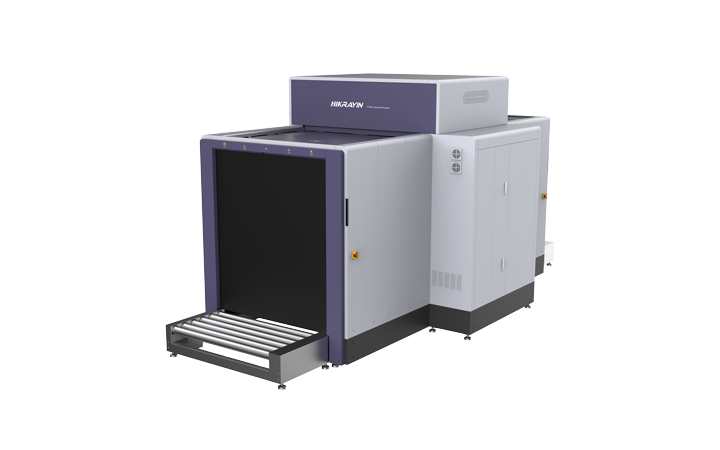
The ISD-CA100100D-TG is a dual-energy, dual-view X-ray intelligent security inspection system designed for security checkpoints. Its imaging capabilities, HD image processing, and integrated AI detection functions support baggage inspection in customs facilities, railway stations, ports, stadiums, and other public venues.
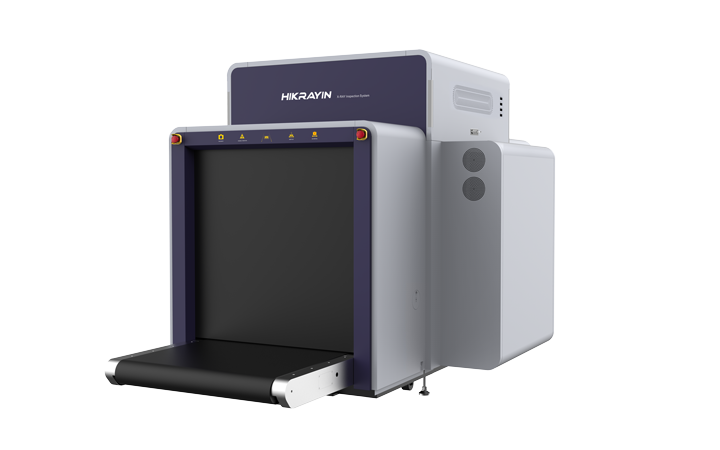
An X-ray baggage scanner does not identify objects in the same way as a conventional camera. Instead, it produces an image based on the attenuation of X-rays as they pass through the contents of a bag or parcel.
Different materials absorb and transmit X-rays differently. The resulting image provides information about the internal composition of an inspected item, helping operators distinguish objects that may require closer examination.
Material discrimination is particularly useful when baggage contains several different types of objects. For example, a bag may include clothing, a laptop, metal accessories, plastic containers, and personal items packed closely together. A screening system needs to present enough information for operators to assess these contents without opening the bag.
Without material-related imaging information, it may be difficult to distinguish certain objects based on shape alone. Material classification adds another reference point to the inspection process and helps operators make more informed decisions.
Dual-energy X-ray imaging uses two different X-ray energy ranges to obtain additional information about the materials inside an inspected object.
When X-rays pass through an item, their intensity decreases according to the material's properties and the thickness of the object. The degree of attenuation varies with energy. Different materials therefore produce different attenuation responses at different energy levels.
By comparing the two sets of measurements, an imaging system can estimate material characteristics and separate inspected contents into material categories.
In general, the process involves three stages:
X-ray transmission: The system sends X-rays through the baggage or parcel and measures the transmitted radiation.
Dual-energy data collection: Measurements at different energy levels provide information about how the inspected materials attenuate X-rays.
Image processing and classification: The system processes the collected data and displays material-related information to support operator interpretation.
The result is not a chemical identification of every object. Rather, it provides a useful material classification reference that helps distinguish broad groups of contents during security screening.
The accuracy and usefulness of this classification depend on factors such as material composition, object thickness, overlapping contents, imaging conditions, and system calibration.
Many X-ray baggage inspection systems use different colors to represent material categories. Although the exact color scheme depends on the system configuration and image processing technology, common representations include:
Orange: Typically indicates organic materials, such as food, paper, textiles, and some plastics.
Blue: Commonly represents metals and other inorganic materials.
Green: Often indicates mixed materials or certain light metals, depending on the imaging system.
These colors help operators interpret the scanned image more efficiently, but they should not be treated as universal chemical labels. A color indicates a material classification generated by the system, not definitive proof of an object's identity.
For example, an orange region may represent several different types of organic material. Similarly, a blue area may contain different metal objects with different shapes and densities.
Operators should therefore assess color information together with object shape, size, density, position, and surrounding contents. A metal object may be a normal electronic component, while an organic-looking region may require further attention depending on its shape and context.
Training is also important. Operators need to understand the imaging system's color conventions and recognize how overlapping objects or thick materials can influence the displayed image.
Material discrimination is more useful when the X-ray image contains sufficient detail for operators to interpret individual objects.
Poor image clarity can make it difficult to distinguish object boundaries, small components, or items positioned close together. Even when the system provides material-related information, unclear outlines may limit the operator's ability to understand what is being inspected.
Image quality is influenced by several factors, including detector performance, imaging technology, system calibration, object thickness, and image processing algorithms.
The ISD-CA100100D-TG uses advanced X-ray imaging technology and new-generation RAYTINA HD imaging algorithms to provide high-resolution images. This helps present object details and material information in a format suitable for security inspection.
For checkpoint operators, clearer images can make it easier to examine complex baggage contents, compare different regions, and decide whether additional inspection is necessary.
However, image enhancement and material classification serve different purposes. Image processing improves the presentation of scanned information, while material discrimination helps interpret how different contents respond to X-rays. Both contribute to the overall inspection workflow.
Real-world baggage rarely contains objects arranged neatly in separate layers. Clothing may surround electronic devices, metal accessories may overlap with other belongings, and multiple materials may be packed into a small space.
These conditions create challenges for image interpretation.
Material classification can help operators identify different material regions, but it does not eliminate every inspection difficulty. Thick objects may reduce image clarity, while overlapping items can make it harder to determine where one object ends and another begins.
For this reason, material information should be combined with other inspection capabilities.
The ISD-CA100100D-TG integrates dual-energy and dual-view X-ray imaging. Its two viewing angles provide additional perspectives of baggage contents, while material-related information supports the interpretation of different object types. The system also incorporates AI detection algorithms powered by HIKVISION Guanlan Large-Scale AI Models to generate alarms for suspected objects.
These functions address different parts of the screening process. Dual-energy imaging supports material discrimination, dual-view imaging provides another perspective, and AI-assisted detection helps draw attention to objects that may need further review. Final inspection decisions remain part of the security operator's workflow.
Material discrimination is relevant wherever baggage and parcels need to be inspected efficiently without being opened.
Customs checkpoints
Customs facilities handle a wide variety of baggage, parcels, and personal belongings. Material-related imaging information helps operators examine mixed contents and identify items that may require further inspection.
Railway stations
Passenger baggage screening in railway stations often takes place in busy environments. Clear X-ray images and material classification can support operators as they assess different types of baggage moving through security checkpoints.
Ports and logistics facilities
Ports handle goods and packages with varied packaging materials and internal contents. X-ray inspection systems provide a non-intrusive method of examining these items, while material discrimination offers an additional reference for image interpretation.
Stadiums and public venues
Large public venues may experience concentrated passenger arrivals before events. Security equipment needs to support organized screening workflows while providing operators with useful image information for baggage assessment.
In these applications, the actual inspection workflow depends on the venue's security procedures, baggage characteristics, staffing arrangements, and equipment configuration.
Material discrimination is only one part of a complete security inspection solution. Before deployment, operators and system integrators should also evaluate equipment dimensions, power requirements, environmental conditions, and operating noise.
The ISD-CA100100D-TG has a tunnel opening of 1000 mm wide by 1000 mm high, with overall dimensions of 3590 mm in length, 1630 mm in width, and 1825 mm in height. These dimensions should be considered when planning checkpoint layouts and baggage conveyor integration.
Its main operating specifications include:
| Parameter | Specification |
|---|---|
| Tunnel size | 1000 mm (W) × 1000 mm (H) |
| Overall dimensions | 3590 × 1630 × 1825 mm |
| Power supply | 230 VAC or 110 VAC |
| Frequency | 50/60 Hz (±3 Hz) |
| Maximum power consumption | 1.3 kW |
| Noise level | Less than 65 dB(A), measured 100 cm from the device surface |
| Operating temperature | 0°C to 40°C |
| Storage temperature | -20°C to 60°C |
| Humidity | 5%–95%, non-condensing |
The installation environment should provide a suitable power connection, adequate space for equipment operation and maintenance, and environmental conditions within the specified limits.
Radiation protection is another essential consideration. The manufacturer states that the system's X-ray leakage level is virtually identical to natural background radiation and that the equipment meets applicable international health and safety requirements. For procurement and site acceptance, users should review the relevant radiation test reports, certifications, and local regulatory requirements.
Security inspection equipment needs to perform consistently in demanding environments. Image quality, system stability, component reliability, and software performance all contribute to the effectiveness of daily operations.
Hikrayin is a technology-driven company and an innovative subsidiary of Hikvision, specializing in intelligent inspection and imaging solutions. Its technology portfolio combines X-ray imaging, millimeter-wave sensing, electromagnetic detection, and AI technologies for transportation hubs, public venues, logistics, manufacturing, and critical infrastructure.
Quality management is incorporated throughout its product lifecycle, from research and development to manufacturing and delivery. Standardized procedures, testing protocols, and continuous improvement processes are used to support product reliability and consistent performance.
The company also emphasizes responsible development through energy-efficient product design, cybersecurity, data protection, and compliance management. These considerations are increasingly relevant as security inspection equipment becomes more integrated with digital systems and connected operational environments.
When evaluating a dual-energy X-ray inspection system, buyers should look beyond the presence of a material classification function. The complete imaging workflow needs to match the inspection requirements of the intended site.
Important considerations include the types of baggage being inspected, the required tunnel dimensions, image clarity, material classification capabilities, operator training, and compatibility with existing checkpoint arrangements.
It is also useful to review how different functions work together. Dual-energy imaging provides material-related information, image processing improves visual detail, and AI-assisted detection can help identify suspicious regions for further examination. These capabilities should be evaluated alongside operating conditions, radiation safety documentation, and maintenance requirements.
The ISD-CA100100D-TG combines dual-energy and dual-view imaging with HD image processing and AI-assisted detection for security checkpoints handling a wide range of baggage and parcels.
By providing additional material information alongside detailed X-ray images, the system supports a more structured approach to baggage inspection. For customs facilities, railway stations, ports, stadiums, and other public venues, Hikrayin offers intelligent inspection technologies designed to support security operations and practical deployment requirements.