At a busy customs checkpoint or seaport, security screening involves more than examining the contents of baggage and parcels. When an inspection raises a concern, operators may need to identify the relevant item, review its X-ray image, and find the corresponding camera record. If these records are difficult to match, follow-up checks can take longer and create additional work for security personnel.
Package-to-camera image correlation helps connect these records, making it easier to review an inspection event using both internal X-ray information and external visual context. For facilities handling a continuous flow of baggage and goods, this capability can support a more organized screening process. The ISD-CA150180D Dual-Energy Dual-View X-Ray Intelligent Security Inspection System integrates this function to help make security event tracing more convenient and accurate.
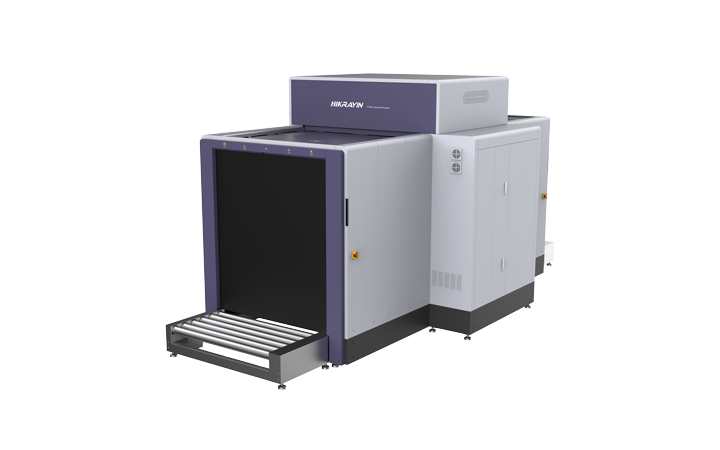
An X-ray baggage scanner allows operators to inspect the contents of baggage or parcels without opening them. The resulting images reveal internal structures and material characteristics, helping personnel identify items that may require further examination. However, an X-ray image may not provide all the information needed when an inspection must be reviewed later.
For example, an operator may need to revisit an alert, clarify which package was involved, or retrieve visual information for an internal review. The team may need to locate the corresponding camera image and confirm that it relates to the same inspection event.
When X-ray images and camera records are managed separately, staff may have to search through multiple records or rely on timestamps and manual checks. This can complicate the review process, particularly in high-throughput environments.
Image correlation creates a more direct relationship between the X-ray image and the corresponding camera-captured image. It helps operators access relevant visual information during follow-up checks without treating each record as an isolated item. The function supports the review process, while final security decisions remain subject to operator judgment and established procedures.
The principle is straightforward: an X-ray image provides information about an item's internal contents, while a camera image provides visual information about the baggage or parcel being inspected. Associating the two records allows personnel to review them in context.
A typical workflow involves three stages.
Image capture: As baggage or parcels pass through the inspection area, the X-ray system generates images of their contents and a camera captures the corresponding visual image.
Record association: The system links the relevant images so they can be reviewed together or retrieved through the associated inspection record, depending on the system configuration.
Event review: If an alert or question arises, operators can refer to the associated images to help identify the relevant item and understand the inspection context.
The usefulness of this workflow depends on accurate image association, accessible records, suitable system configuration, and consistent operating procedures. Facilities should establish clear rules for reviewing records and documenting follow-up actions.
An inspection alert often triggers additional work. Operators may need to examine the X-ray image more closely, verify the baggage involved, or decide whether further inspection is necessary. In these situations, being able to retrieve the associated camera image can provide useful context.
For instance, when multiple items pass through a checkpoint in a short period, personnel need a reliable way to distinguish the item under review from other baggage. The camera image can help establish the visual context, while the X-ray image provides information about internal contents.
The ISD-CA150180D includes a package-to-camera image correlation feature designed to make event tracing more convenient and accurate. For customs checkpoints, ports, and other important security venues, this function can help personnel connect inspection records with the corresponding visual information during a follow-up review.
The practical benefit is not simply having more images available. It is making related records easier to identify and use when a specific inspection needs attention. Actual time savings depend on inspection volume, record management practices, and the way the system is integrated into daily operations.
The quality of an inspection image affects how effectively operators can examine an item's contents. Images with clearer internal details can help personnel distinguish structures and material patterns, supporting more informed assessments.
The ISD-CA150180D uses advanced X-ray imaging technology and next-generation RAYTINA HD imaging algorithms to deliver high-definition image quality. This helps operators examine inspection images in greater detail and provides useful visual information when an inspection needs to be reviewed.
X-ray systems may use different colors to represent material characteristics. In common display conventions, orange often indicates organic materials, blue represents metals and other inorganic materials, and green may indicate mixed materials or certain light metals. Exact color interpretation can vary with system configuration and image-processing technology, so operators should follow the manufacturer's guidance and the procedures established for their equipment.
High-definition imaging and image correlation serve different but complementary purposes. Image quality helps operators examine what is inside a package, while correlation helps them connect that examination with the corresponding camera record. Together, these functions can make inspection records more useful during initial screening and subsequent reviews.
Image correlation is one part of a broader inspection process. Automated detection can also help operators identify images or objects that deserve closer attention.
The ISD-CA150180D incorporates AI detection algorithms powered by the HIKVISION Guanlan Large-Scale AI Models. According to the product specifications, these algorithms are designed to improve the detection accuracy of suspected objects while reducing false alarms.
In practical use, an AI-generated alert can direct an operator's attention to a particular inspection image. The operator can then assess the X-ray image, refer to the associated camera image when appropriate, and follow the site's procedures to determine whether additional checks are required.
AI alerts should not be treated as automatic confirmation that an item poses a threat. Similarly, the absence of an alert does not guarantee that an item is risk-free. Human review, established screening procedures, and appropriate escalation remain essential parts of security operations.
By combining AI-assisted detection with high-definition imaging and package-to-camera correlation, security teams have multiple tools to support inspection and review. Each feature addresses a different stage of the workflow rather than replacing the need for trained personnel.
Package-to-camera image correlation can be particularly useful in facilities where baggage, parcels, and goods are screened throughout the day and inspection records may need to be revisited.
At customs checkpoints, personnel may need to review an item associated with a specific screening event. Linking X-ray and camera images can help them retrieve relevant visual information during a follow-up check.
At ports and logistics facilities, varied goods and busy operating schedules can make inspection records more challenging to manage. A structured relationship between X-ray images and camera records can help personnel review individual events without relying entirely on manual searches.
Other important security venues may also benefit from this approach when inspection history and traceability are operational priorities. However, the value of the feature depends on the site's screening procedures, record availability, system configuration, and staff training.
Before deployment, facility managers should determine how associated images will be accessed, how long inspection records will be retained, and how review outcomes will be documented. These procedures help ensure that image correlation fits into the wider security management process.
Image correlation should be evaluated alongside the equipment's physical and operational requirements. Proper site planning helps prevent installation issues and supports consistent daily use.
The ISD-CA150180D has a tunnel opening measuring 1550 mm wide by 1805 mm high. Its overall dimensions are 6280 mm long, 2625 mm wide, and 2895 mm high. Facilities should account for the equipment footprint, baggage movement, operator access, and maintenance requirements when planning the installation area.
Electrical and environmental conditions also need to be checked. The system has a maximum power consumption of 2.5 kW and supports 110 VAC or 230 VAC configurations, subject to the specified tolerances and frequency requirements. Its operating temperature range is 0°C to 40°C, with a non-condensing humidity range of 5% to 95%.
Operators should receive training on X-ray image interpretation, alert handling, image retrieval, and escalation procedures. Facilities should also establish suitable access controls and record-retention practices in line with their operational and data-protection requirements.
As a technology-driven company specializing in intelligent inspection and imaging solutions, Hikrayin emphasizes quality management throughout research and development, manufacturing, testing, and delivery. Standardized procedures and product validation are important considerations for organizations deploying inspection equipment in demanding environments. Site-specific acceptance testing and staff training remain necessary to confirm that the equipment and workflow meet operational requirements.
Effective security screening involves more than identifying a suspicious object. Personnel also need practical ways to review inspection decisions, locate supporting records, and understand the context of an event when further investigation is necessary.
Package-to-camera image correlation helps connect X-ray inspection images with camera-captured visuals, making related records easier to use during follow-up checks. Combined with high-definition imaging and AI-assisted detection, it can support a more structured inspection workflow at customs checkpoints, ports, and other security facilities.
For organizations evaluating intelligent inspection equipment, the ISD-CA150180D offers a combination of dual-energy dual-view X-ray inspection, AI-based suspected-object alerts, and package-to-camera image correlation. The right deployment approach depends on inspection volume, site conditions, record-management practices, and established security procedures.
By assessing these factors before installation, facility managers can determine how image correlation fits into their existing operations and how the system can support clearer, more traceable inspection records.