Security checkpoints must inspect a steady flow of bags and parcels without creating unnecessary delays for passengers, staff, or facility operators. When operators have to review large numbers of X-ray images, unclear image details and repeated false alarms can make screening more difficult. Security teams therefore need equipment that combines clear imaging, intelligent detection, and practical workflow support.
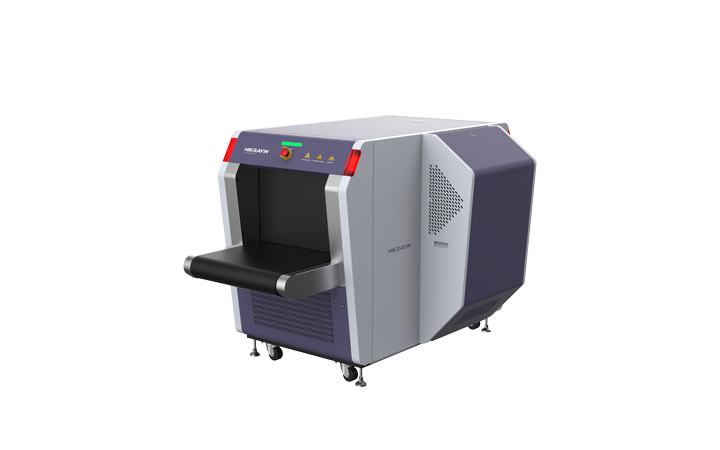
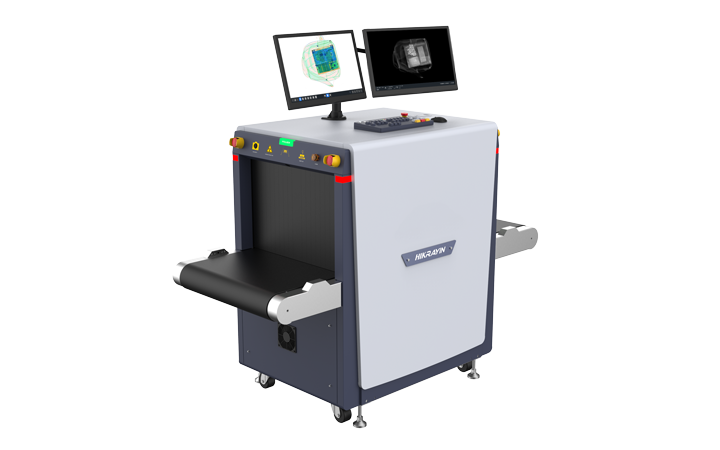
The ISD-CA6040S-H(BS) is a dual-energy, single-view intelligent backscatter X-ray security inspection system designed for checkpoint environments. It integrates AI-based suspicious-object detection with high-definition imaging and baggage-image correlation features. Designed for carry-on luggage, 20-inch cabin suitcases, backpacks, and parcels, it can support screening operations at customs checkpoints, railway stations, ports, stadiums, and other public venues with high passenger or visitor traffic.
An X-ray baggage scanner allows operators to inspect the contents of luggage without opening every bag. However, identifying potentially dangerous items from an image is not always straightforward. Items packed closely together can overlap, and different materials may produce similar visual patterns. Everyday objects can also appear unusual depending on their position, shape, or surrounding contents.
When an inspection system generates too many false alarms, operators may spend additional time reviewing bags that do not contain prohibited items. This can slow down queues and increase the workload at checkpoints. At the same time, a screening process must not overlook objects that require closer examination.
The goal is not simply to generate fewer alarms. It is to help operators identify suspicious objects more accurately, review alerts efficiently, and make informed screening decisions. AI-assisted detection, combined with readable X-ray images and consistent operating procedures, can contribute to this objective.
Traditional X-ray screening relies heavily on operators interpreting the images displayed by the inspection system. Their decisions depend on image clarity, training, experience, and the complexity of the baggage contents.
AI-assisted screening adds another layer of analysis. Detection algorithms process image information to identify objects that may require further attention. Instead of relying exclusively on manual visual recognition, operators receive additional information from automated detection, helping them focus on potentially relevant areas of an image.
The ISD-CA6040S-H(BS) X-ray inspection system incorporates AI detection algorithms powered by the HIKVISION Guanlan Large-Scale AI Models. According to the product specifications, this approach is designed to improve the detection accuracy of suspected objects while reducing the false alarm rate.
For checkpoint managers, the practical value lies in supporting a more manageable inspection process. When the system flags a suspected object, the operator can review the corresponding X-ray image and determine whether additional inspection is necessary. The alarm should be treated as an aid to decision-making rather than automatic proof that a prohibited item is present.
Actual detection performance depends on the objects being inspected, baggage conditions, system configuration, and operating procedures. Staff training and established escalation processes remain important parts of an effective security program.
AI detection is only one part of a screening system. Operators also need images that allow them to examine baggage contents and understand why an object may have triggered an alert.
Poorly distinguishable details can make it difficult to separate adjacent objects or interpret complicated baggage arrangements. Clearer images help operators examine shapes, boundaries, and material characteristics before deciding whether a bag needs further review.
The ISD-CA6040S-H(BS) uses advanced X-ray imaging technology and the new-generation RAYTINA HD imaging algorithms to deliver high-definition image quality. This supports the visual review process that accompanies AI-based detection.
Image clarity is especially relevant when inspecting backpacks, cabin suitcases, and parcels containing several different objects. For example, a tightly packed bag may contain electronic accessories, clothing, personal items, and metal components in close proximity. A readable image helps the operator assess how these objects are arranged and whether further examination is warranted.
Material colors can provide additional information. In many X-ray imaging systems, orange commonly represents organic materials, blue often indicates metals and other inorganic materials, and green can represent mixed materials or certain light metals. However, color interpretation varies with the system's imaging and processing configuration. Operators should follow the equipment's own interpretation guidance rather than identify an object from color alone.
Automated detection is most useful when it fits naturally into the checkpoint workflow. An alarm must be easy for an operator to review, and the screening procedure should define what happens next.
A practical workflow may include the following steps:
Baggage entry: The passenger places a bag or parcel on the conveyor for X-ray inspection.
Image generation: The system produces an X-ray image based on how materials absorb X-rays.
AI-assisted analysis: The detection algorithm identifies suspected objects and generates an alert when applicable.
Operator review: The operator examines the image and assesses the alert in context.
Further inspection: If the circumstances warrant it, the bag is directed to the appropriate secondary screening procedure.
This process combines automated assistance with human judgment. It also gives security teams a clearer basis for reviewing alarm patterns, identifying recurring operational issues, and determining whether staff need additional training.
Checkpoint managers should assess the entire workflow rather than focus only on the number of alarms displayed. Useful operational indicators may include the time required to resolve alerts, the proportion of alarms that lead to further inspection, queue conditions, and the consistency of operator decisions. These measures should be interpreted alongside security requirements, not used to reduce necessary inspections simply to improve throughput.
Security screening sometimes requires more than identifying an object inside a bag. Staff may also need to establish which baggage item was being inspected when an event occurred.
The ISD-CA6040S-H(BS) intelligent security scanner includes a package-image correlation function that associates the X-ray image of baggage with an image captured by a camera. This makes event tracing more convenient and accurate by helping personnel connect inspection records with the corresponding baggage image.
In a busy railway station, customs checkpoint, port, or stadium, this type of correlation can assist staff when reviewing a particular screening event. Instead of relying only on a description or an isolated X-ray image, personnel can use the associated image information to support the review process.
Organizations should define how these records are accessed, retained, and reviewed. Appropriate access controls, retention policies, and data-protection procedures are important, particularly in environments where camera images may contain identifiable individuals or other sensitive information.
Image correlation supports traceability, but it does not replace the need for clear incident-handling procedures or appropriate security controls.
A screening system must fit the physical conditions of the checkpoint as well as its inspection requirements. Available floor space, baggage dimensions, electrical supply, environmental conditions, and operator positioning should all be considered before installation.
The ISD-CA6040S-H(BS) is designed for carry-on luggage, 20-inch cabin suitcases, backpacks, and parcels. Its stated tunnel opening measures 620 mm wide by 420 mm high, providing a useful reference when evaluating the types of baggage expected at the site.
The equipment's external dimensions are 1,700 mm long, 760 mm wide, and 1,240 mm high. Its compact design can help when planning installations at entrances where space is limited, although the full layout must also allow for conveyor access, passenger movement, maintenance, and safe operator access.
The system's maximum power consumption is 0.92 kW. It supports 110 VAC or 230 VAC power supplies, subject to the specified voltage and frequency tolerances. The stated operating temperature range is 0°C to 40°C, and the noise level is below 60 dB(A) when measured 100 cm from the equipment surface.
These figures should be checked against actual site conditions during project planning. The equipment weighs approximately 490 kg net, so floor loading, delivery access, positioning, and installation arrangements also need to be confirmed.
Before selecting an AI-assisted X-ray scanner, procurement teams and checkpoint managers should review several practical factors.
Inspection requirements: Confirm the expected baggage types, maximum dimensions, daily inspection volume, and applicable security procedures.
Image readability: Assess whether the imaging capabilities support the operator's inspection tasks and the range of objects commonly carried through the checkpoint.
Alarm handling: Understand how suspected-object alerts are presented, how operators review them, and how secondary inspection decisions are documented.
Space and utilities: Verify the tunnel opening, overall equipment dimensions, power supply, floor conditions, and access required for installation and maintenance.
Record management: Determine how X-ray images and associated camera records will be used, who can access them, and how long they should be retained.
Staff preparation: Ensure operators receive appropriate training in image interpretation, alert review, escalation procedures, and the limitations of automated detection.
These checks help organizations evaluate the system as part of a complete screening operation rather than as a standalone piece of equipment.
As a technology-driven company and an innovative subsidiary of Hikvision, Hikrayin specializes in intelligent inspection and imaging solutions. Its technology portfolio integrates X-ray imaging, millimeter-wave sensing, electromagnetic detection, and AI technologies for applications across transportation hubs, public venues, logistics, manufacturing, and critical infrastructure.
Quality management is an important part of the company's stated product lifecycle approach, covering research and development, manufacturing, testing, and delivery. Standardized procedures, product validation, and continuous improvement help support consistent system performance in demanding operating environments.
For organizations planning an intelligent security checkpoint, equipment selection should be based on the actual inspection task, site conditions, and operational requirements. Reviewing AI detection, image quality, image correlation, and installation parameters together can help determine whether a system fits the intended application.
The ISD-CA6040S-H(BS) brings these capabilities together in a single-view X-ray inspection platform designed for baggage and parcel screening. By combining AI-assisted suspicious-object detection with high-definition imaging and image correlation, it can support a more structured review process while keeping operators involved in final screening decisions.
Reducing unnecessary false alarms is important, but reliable security screening also depends on clear procedures, trained personnel, suitable equipment placement, and ongoing operational evaluation. When these elements are planned together, AI-assisted X-ray inspection can become a practical part of a checkpoint's broader security workflow.