At customs checkpoints, seaports, and major transportation facilities, security teams often need to inspect packages and baggage that are larger or more difficult to handle than standard passenger luggage. When an item cannot pass through a conventional inspection tunnel, staff may need to arrange additional handling or use another inspection method. These extra steps can slow down screening and complicate checkpoint operations.
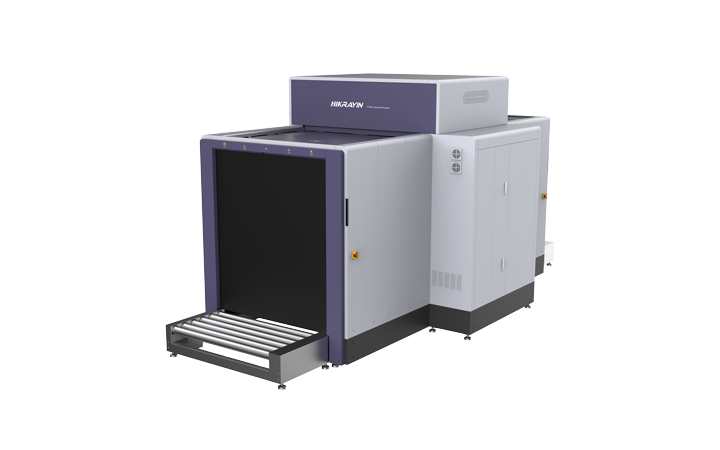
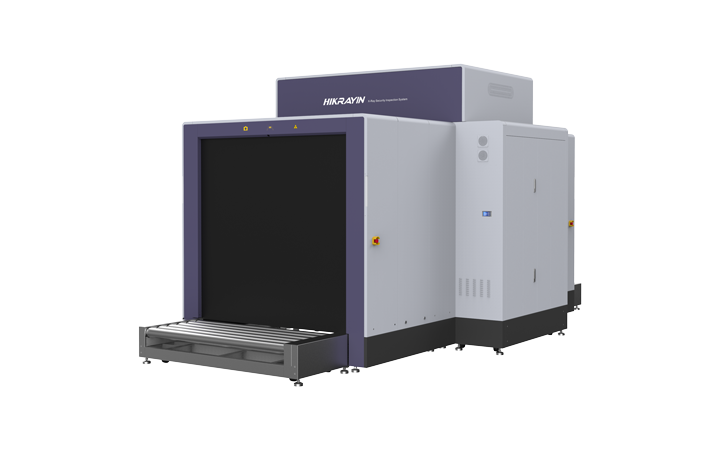
A large-tunnel X-ray scanner provides a practical option for handling larger items without opening every package. With a tunnel measuring 1805 mm wide and 1805 mm high, the ISD-CA180180D is designed for security inspection environments where a larger inspection opening is an important consideration. Its dual-energy, dual-view imaging architecture and intelligent image-processing capabilities also support the inspection process by providing operators with additional visual information.
The dimensions of an X-ray scanner's tunnel directly affect which items can enter the inspection system. Standard baggage scanners are generally designed around routine luggage and parcel screening. However, customs facilities, logistics hubs, and ports may handle bulky suitcases, large cartons, equipment cases, and irregularly shaped packages.
A larger tunnel can reduce the need to divide or rearrange items before inspection, provided that each item remains within the equipment's permitted dimensions and loading requirements. This can make the inspection process more straightforward for goods that are difficult to position in a smaller opening.
The ISD-CA180180D has a tunnel size of 1805 mm (W) × 1805 mm (H). This opening provides a substantial inspection space for larger baggage and cargo packages. However, tunnel dimensions should not be the only factor used to determine whether a scanner can handle a particular shipment. Buyers should also confirm the conveyor's permitted load, item weight, package length, and handling requirements with the equipment provider.
For facilities that regularly inspect oversized goods, checking these details before installation helps prevent mismatches between the scanner and actual operating needs.
A large inspection tunnel addresses the physical size of the items being screened, but image quality remains equally important. Operators need to interpret the contents of a package clearly, especially when several objects overlap or when different materials are packed closely together.
Dual-energy imaging helps distinguish material categories by analyzing how materials respond to X-rays at different energy levels. In a typical color-coded X-ray image, organic materials may appear orange, metals and other inorganic materials may appear blue, while mixed materials or certain light metals may appear green. The exact presentation depends on the scanner's configuration and image-processing technology.
This material information gives operators another reference when reviewing an image. It does not automatically identify every object, but it can help them assess the contents of a package and decide whether further examination is necessary.
Dual-view imaging captures images from two different angles. When objects overlap in one view, the second view can provide another perspective and help operators examine areas that are difficult to interpret from a single direction.
Together, dual-energy and dual-view imaging provide complementary information: one supports material differentiation, while the other offers an additional viewing angle. For large or densely packed items, both can be useful during image review.
The ability to display useful image details is essential when inspecting complex packages. Dense objects, layered materials, and closely arranged components can make image interpretation more challenging. A scanner therefore needs more than a large tunnel; it also needs imaging technology that presents information clearly to the operator.
The ISD-CA180180D uses advanced X-ray imaging technology and the RAYTINA HD imaging algorithms to deliver high-resolution image quality. Clearer image presentation can help operators examine package structures, distinguish visible components, and review areas that may require closer attention.
Image quality is influenced by several factors, including the imaging system, material composition, object arrangement, and image-processing settings. Operators should also receive appropriate training so that they understand how to interpret different material colors, overlapping objects, and unusual image patterns.
For buyers evaluating an X-ray inspection system, it is useful to request sample images of representative items. Testing actual baggage, cartons, or equipment cases can provide a more realistic view of how the scanner performs under the conditions expected at the facility.
A large-tunnel scanner requires sufficient space not only for the inspection opening but also for the equipment body, conveyor access, and operator activities. Installation planning should therefore begin with the complete equipment dimensions rather than the tunnel opening alone.
The ISD-CA180180D has overall dimensions of 6280 mm (L) × 2900 mm (W) × 2940 mm (H). Before selecting an installation location, facility planners should check the available floor area, ceiling clearance, access routes, and the space needed to move the equipment into position.
Several practical questions should be considered:
Can the equipment be transported through the facility's entrances, corridors, and loading areas?
Is there sufficient space for items to approach and leave the scanner without obstructing other operations?
Can operators access the control position and review images without interfering with cargo movement?
Is there enough clearance for maintenance and routine equipment inspection?
Does the planned layout allow staff to manage items that require additional examination?
For customs and port projects, the scanner should be considered as part of the wider inspection lane. The surrounding workflow may include document checks, manual examination areas, cargo handling equipment, and temporary storage. Coordinating these elements during the design stage can help avoid unnecessary movement and congestion after the system becomes operational.
Technical compatibility is another important part of equipment selection. A scanner may fit the available space but still require adjustments to the facility's electrical supply or operating environment.
The system has a maximum power consumption of 2.5 kW. Its specified power supply options are 230 VAC (±10%) at 50 Hz or 60 Hz (±3 Hz), and 110 VAC (±10%) at 50 Hz or 60 Hz (±3 Hz). Before installation, the project team should confirm which supply configuration is appropriate for the site and whether the available electrical infrastructure meets the equipment requirements.
Noise is also worth considering, particularly when the scanner is installed in an enclosed inspection area or near regularly occupied workspaces. The specified noise level is less than 65 dB(A), measured at a distance of 100 cm from the device surface. Actual site conditions, including surrounding equipment and room acoustics, may affect the overall noise experienced by staff.
The specified operating temperature range is 0°C to 40°C, while the storage temperature range is -20°C to 60°C. The supported humidity range is 5% to 95% without condensation. These figures should be compared with the environmental conditions at the intended installation site, especially in facilities exposed to seasonal temperature changes or humid conditions.
X-ray safety should be considered throughout the planning and operation of an inspection checkpoint. Facility managers need to follow the equipment's operating instructions, installation requirements, and applicable local radiation-safety regulations.
Hikrayin states that the system is designed with X-ray leakage levels virtually identical to natural background radiation. For a specific project, buyers should review the relevant product test documentation and applicable compliance information rather than relying solely on a general product statement. Site acceptance checks and routine maintenance should also follow the manufacturer's guidance and local requirements.
Operational procedures matter as well. Staff should understand how to position packages, review images, respond to suspected items, and arrange secondary inspections. Clear procedures help ensure that the scanner is used consistently and that inspection decisions are handled through the facility's established security process.
The system also incorporates AI detection algorithms powered by the HIKVISION Guanlan Large-Scale AI Models. These algorithms support the automatic alarming of suspected objects. AI alerts can assist operators, but they should be treated as part of the inspection workflow rather than a replacement for trained personnel and established security procedures.
Selecting a large-tunnel X-ray scanner requires matching the equipment's physical capacity and imaging functions with the items being inspected and the way the facility operates.
Before making a decision, procurement and engineering teams should evaluate:
Item dimensions: Compare typical and maximum package sizes with the tunnel opening, while confirming weight and conveyor limits.
Imaging requirements: Consider whether dual-energy material differentiation, dual-view imaging, and HD image presentation are relevant to the inspection tasks.
Installation conditions: Check the equipment footprint, access routes, ceiling height, and surrounding workflow.
Electrical compatibility: Confirm the available voltage, frequency, and power capacity.
Operating environment: Compare site temperature and humidity with the equipment's specified ranges.
Safety and service: Review radiation-safety documentation, maintenance requirements, operator training, and technical support arrangements.
A site assessment using representative cargo and baggage is particularly useful. It allows the project team to verify physical compatibility and understand how image review will fit into daily operations.
Large cargo and baggage inspection involves more than providing a wider opening. Facilities need to consider image interpretation, operator workflow, installation space, electrical compatibility, and safety management as parts of one system.
The ISD-CA180180D combines an 1805 mm × 1805 mm inspection tunnel with dual-energy, dual-view imaging, RAYTINA HD imaging algorithms, and AI-assisted suspected-object alarming. These features make it a solution worth evaluating for customs checkpoints, ports, and other important security inspection locations where larger items need to be screened.
As a technology-driven subsidiary of Hikvision, Hikrayin specializes in intelligent inspection and imaging solutions that integrate X-ray imaging, millimeter-wave sensing, electromagnetic detection, and AI technologies. Its quality management approach covers research and development, manufacturing, testing, and delivery, with an emphasis on standardized procedures and continuous improvement.
For project owners planning a new inspection lane or upgrading an existing facility, the right equipment choice starts with a clear understanding of cargo dimensions, site conditions, and operational requirements. Matching these factors with the scanner's specifications helps build an inspection process that is practical, consistent, and suitable for the demands of the facility.