When a suitcase passes through an X-ray baggage scanner, the operator does not see the contents directly. Instead, the system converts the interaction between X-rays and different materials into an image that reveals the internal structure of the baggage. The quality of this image has a direct influence on how easily operators can examine objects, distinguish material characteristics, and decide whether further inspection is necessary.
However, inspection clarity is not determined by resolution alone. Image processing, material absorption, object overlap, scanning conditions, and display performance all contribute to the final image. Even a scanner with advanced imaging technology needs to present sufficient detail and contrast for operators to interpret the contents accurately.
For security checkpoints handling a large volume of baggage, these factors are particularly important. Airports, customs facilities, railway stations, ports, and stadiums need imaging systems that support efficient inspection without making image interpretation unnecessarily difficult.
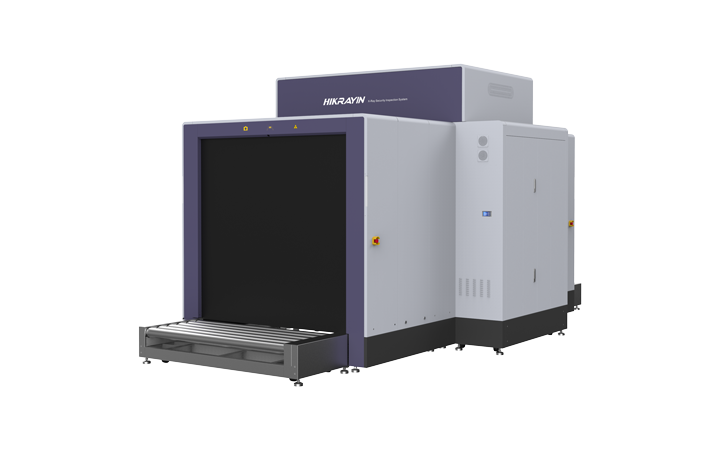
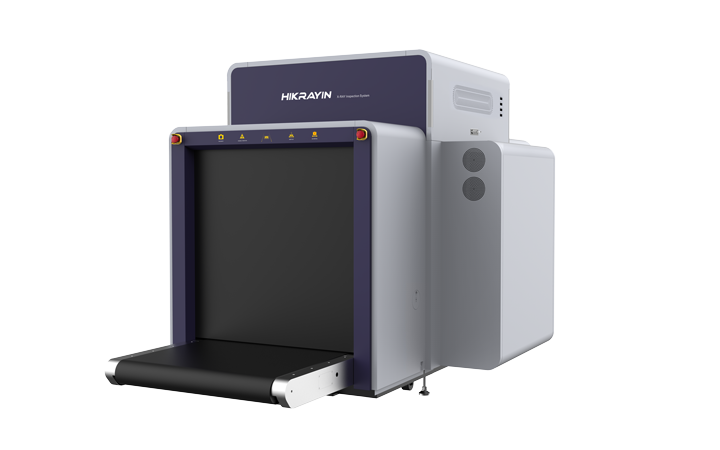
The ISD-CA100100D-TG5 Dual-Energy Dual-View X-Ray Intelligent Security Inspection System is designed for these demanding environments. By combining advanced X-ray imaging technology with the new-generation RAYTINA HD imaging algorithms, it delivers high-resolution image quality to support baggage inspection and operational efficiency.
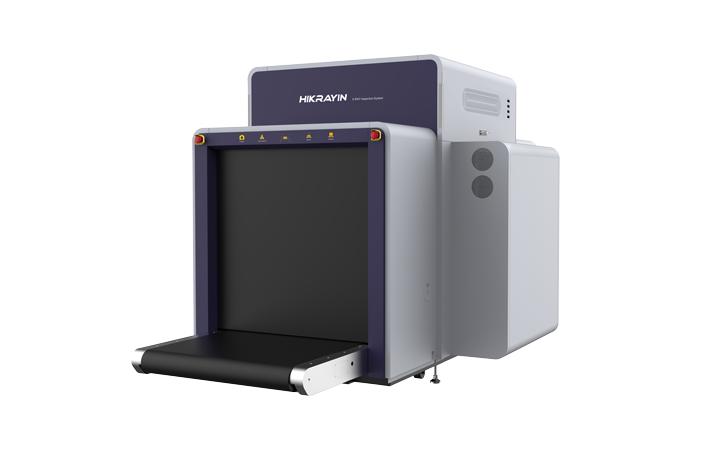
X-ray baggage scanners generate images by measuring how different materials absorb or attenuate X-rays as they pass through baggage. Materials with different densities, thicknesses, and compositions interact with X-rays in different ways. The resulting signals are processed to create an image that helps operators examine the contents without opening the bag.
Several technical factors influence the clarity of the final image.
Image resolution determines how much detail can be represented. Higher resolution can help make smaller features and object boundaries more distinguishable, provided that the imaging system and processing pipeline preserve those details.
Image contrast affects how clearly objects can be distinguished from their surroundings. When two items have similar displayed values, their boundaries may be difficult to identify. Appropriate image processing helps present differences more clearly.
Noise and image artifacts can also affect interpretation. Unwanted variations, distortions, or unclear edges may make it harder to examine small objects or separate overlapping items.
Material representation is another important factor. Since different materials absorb X-rays differently, the system must process the acquired signals in a way that provides useful visual information to the operator.
These factors work together. A high-resolution image is useful, but resolution alone cannot compensate for poor contrast, excessive noise, or unsuitable image processing.
The detector captures information during scanning, but the raw data must be processed before it becomes an image that an operator can interpret.
Image processing algorithms help convert detector signals into a visual representation of baggage contents. Depending on the system, processing may improve edge definition, manage image contrast, and make structural details easier to examine.
For example, when a bag contains several tightly packed objects, their outlines may overlap in the resulting image. Suitable image processing can help preserve visible boundaries and make the overall structure easier to assess. It does not physically separate the objects, but it can improve how their features are presented.
The quality of the processing algorithm is therefore an important part of an X-ray scanner's imaging performance.
The ISD-CA100100D-TG5 uses new-generation RAYTINA HD imaging algorithms alongside advanced X-ray imaging technology. This combination is designed to provide superior resolution image quality for security screening environments where operators need to examine a wide range of baggage contents.
For facilities with continuous screening operations, clear and consistent image presentation can help operators review baggage more efficiently and reduce the difficulty of interpreting complex images.
Not all objects appear the same in an X-ray image. Their appearance depends partly on how their materials interact with X-rays.
Material composition, density, thickness, and the energy of the X-ray beam can influence the amount of radiation reaching the detector. The imaging system processes these differences and displays them using grayscale or color-coded representations, depending on its configuration.
In many color X-ray screening systems, different colors are used to indicate broad material categories. For example:
Orange typically represents organic materials.
Blue commonly represents metals and other inorganic materials.
Green generally indicates mixed materials or light metals.
These color conventions help operators distinguish broad material characteristics during inspection. However, the exact color mapping can vary with system configuration and image processing technology. A displayed color should not be treated as definitive proof of an object's identity or threat level.
Clear material representation is especially useful when baggage contains a mixture of clothing, electronic devices, tools, containers, and personal belongings. Operators need to examine both the material characteristics and the overall shape of objects rather than relying on color alone.
This is one reason why image quality should be evaluated in practical inspection conditions, not simply by looking at a technical resolution figure.
One of the difficulties in X-ray baggage screening is that objects are often packed close together. A laptop may be placed beside a power adapter, cables may cross other items, and metal accessories may overlap with objects made from different materials.
When multiple objects overlap in the image, their boundaries can become difficult to distinguish. This may require the operator to spend more time examining the image or reviewing additional information.
Several factors influence how clearly overlapping objects can be interpreted:
The size and shape of the objects.
The materials and thicknesses involved.
The direction from which the baggage is scanned.
The contrast between adjacent objects.
The quality of image processing.
A clear image can help operators recognize visible outlines and material differences, but no imaging system should be expected to make every overlapping object completely distinguishable. Operator judgment and established inspection procedures remain essential.
The dual-view configuration of the ISD-CA100100D-TG5 provides images from two different angles simultaneously. This can offer additional visual information when objects overlap in one view, helping operators examine baggage contents from another perspective. Its role complements HD image processing: one supports image detail, while the other provides an additional viewing angle.
Image quality and automatic threat detection are closely related parts of modern security screening, but they perform different functions.
HD imaging focuses on presenting detailed visual information. It helps operators examine object shapes, boundaries, and material characteristics.
AI detection algorithms analyze image information to identify suspected objects and generate alarms according to the system's detection capabilities and configuration. This can support the operator's review process, but an alarm still needs to be interpreted within the relevant security procedures.
The ISD-CA100100D-TG5 integrates AI detection algorithms powered by the HIKVISION Guanlan Large-Scale AI Models. According to the product specifications, the system is designed to improve suspected-object detection accuracy while reducing the false alarm rate.
Combining HD imaging and AI-assisted detection provides two complementary capabilities: clearer visual information for inspection and automated assistance in identifying items that may require attention.
For security teams, the distinction matters. A clear image does not automatically confirm whether an item is prohibited, and an AI alarm does not replace the operator's responsibility to assess the situation.
Image quality should be assessed in the context of the environment where the scanner will operate.
At customs checkpoints, operators may need to inspect baggage and parcels containing a wide range of goods. Railway stations and ports may experience concentrated passenger or cargo flows at certain times. Stadiums and public venues often need screening procedures that can handle large numbers of visitors within limited periods.
In these environments, image clarity needs to support practical inspection tasks:
Recognizing object outlines: Operators should be able to examine the visible shape and structure of items without excessive visual ambiguity.
Distinguishing material characteristics: The image should provide useful material information to help operators understand what is inside the baggage.
Reviewing complex baggage: The system should present information that supports examination of densely packed or overlapping contents.
Maintaining a consistent workflow: Clear image presentation can help reduce unnecessary repeated examination and support more efficient operator decisions.
The tunnel size and physical dimensions of the scanner also matter when planning a checkpoint. The ISD-CA100100D-TG5 has a tunnel opening of 1000 mm wide by 1000 mm high, with overall dimensions of 3590 mm × 1630 mm × 1825 mm. These specifications help project planners assess whether the equipment is suitable for the intended baggage flow and installation space.
Even a scanner with advanced imaging technology needs suitable operating conditions and regular equipment management.
Power stability is one consideration. The ISD-CA100100D-TG5 supports 230 VAC and 110 VAC power supplies, with a maximum power consumption of 1.3 KW. Project teams should confirm that the available electrical supply matches the selected configuration before installation.
Environmental conditions should also be considered. The specified operating temperature range is 0°C to 40°C, with a humidity range of 5% to 95% without condensation. Operating the equipment within its specified conditions helps support stable system performance.
Routine maintenance is equally important. Inspection teams should follow the manufacturer's procedures for equipment cleaning, conveyor condition checks, system status monitoring, and scheduled technical maintenance. Any image abnormality should be assessed according to the relevant service procedures rather than addressed through unverified adjustments.
Operators also need appropriate training. Understanding material colors, recognizing common object shapes, and following consistent image review procedures are essential to making effective use of the information provided by the scanner.
When comparing baggage scanners, buyers should consider more than a single resolution specification. Image processing capability, material representation, viewing configuration, AI-assisted detection, operating conditions, and installation requirements all influence how effectively a system supports security operations.
Hikrayin is a technology-driven company and an innovative subsidiary of Hikvision, specializing in intelligent inspection and imaging solutions. Its technologies combine X-ray imaging, millimeter-wave sensing, electromagnetic detection, and AI to serve transportation hubs, public venues, logistics, manufacturing, and critical infrastructure.
Quality management is integrated throughout its product lifecycle, from research and development to manufacturing and delivery. Standardized procedures, testing protocols, and continuous improvement processes support product reliability and consistent performance.
For customers deploying inspection systems in public facilities, cybersecurity and compliance are also important considerations. Hikrayin incorporates data protection, secure system design, and responsible operational practices into its approach to product development.
The ISD-CA100100D-TG5 Dual-Energy Dual-View X-Ray Intelligent Security Inspection System brings together RAYTINA HD imaging algorithms, AI-assisted suspected-object detection, and dual-view imaging in a system designed for demanding security checkpoints.
X-ray image clarity depends on a combination of resolution, contrast, material representation, image processing, and scanning conditions. These factors determine how easily operators can examine baggage contents and identify details that may require further attention.
For high-traffic facilities, selecting an inspection system with suitable imaging technology is an important part of building an effective screening process. Clear image presentation, complementary detection functions, appropriate installation planning, and trained operators all contribute to daily inspection performance.
With its RAYTINA HD imaging algorithms, AI detection capabilities, and dual-view configuration, the ISD-CA100100D-TG5 provides an integrated option for customs checkpoints, railway stations, ports, stadiums, and other public security environments.
By evaluating imaging performance in real operating conditions, security teams can make better-informed equipment decisions and establish screening workflows that balance inspection clarity with operational efficiency.