Security screening operations often face their greatest pressure during predictable periods of concentrated arrivals. Government offices experience morning visitor traffic, schools and hospitals manage regular flows of people carrying personal belongings, and scenic attractions or sports venues may receive large groups within a short period. At these times, the challenge is not simply to inspect more bags. Security teams must maintain a consistent inspection process while managing conveyor movement, operator attention, and the handling of potentially suspicious items.
A fixed conveyor speed may not suit every operating condition. When baggage arrives continuously, an unsuitable speed can make it difficult to coordinate item placement, image review, and the movement of bags through the inspection tunnel. Operators may have too little time to review successive images, or the conveyor may move more slowly than the actual screening flow requires.
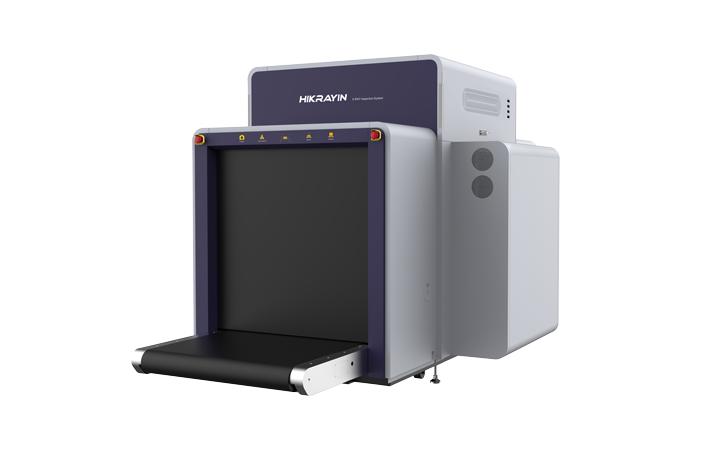
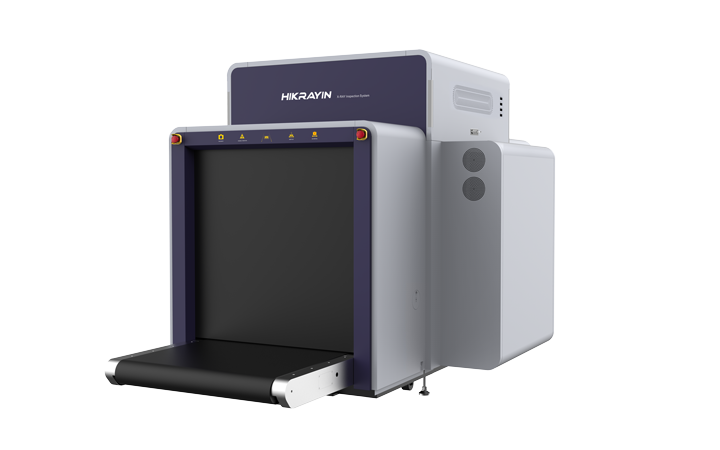
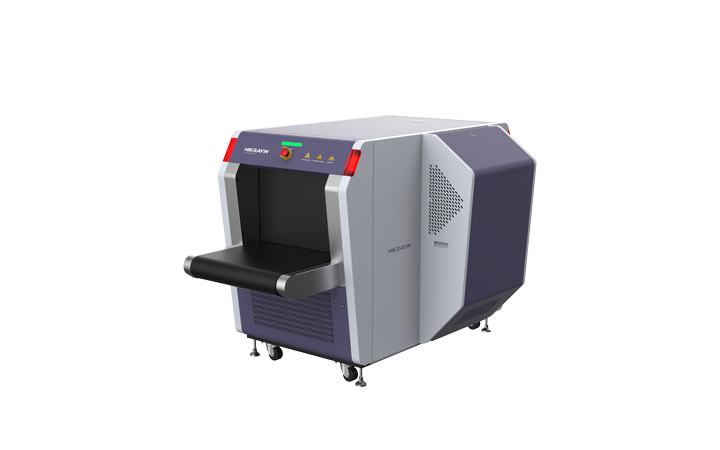
A variable-speed X-ray conveyor provides greater flexibility. By allowing operators to adjust conveyor speed according to the operating scenario, the ISD-SC5030S-H2CVL Single-View and Dual-Energy X-ray Intelligent Security Inspection System helps security teams adapt their screening workflow to changing traffic conditions. Its variable-speed function works alongside intelligent recognition, image enhancement, and inspection data management features to support more coordinated baggage screening.
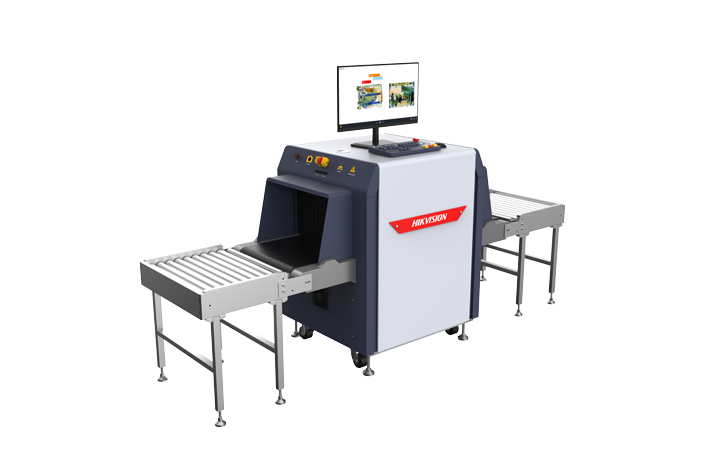
A security checkpoint is a coordinated process involving several steps: placing baggage on the conveyor, transporting it through the X-ray tunnel, reviewing the resulting image, identifying potential concerns, and handling items that require further inspection.
When passenger or visitor arrivals increase, these steps must operate smoothly under greater pressure.
A conveyor speed that is too slow may restrict the movement of baggage through the checkpoint. This can contribute to queues, particularly when multiple visitors arrive with bags or parcels at the same time.
On the other hand, moving baggage too quickly can increase the workload on operators who need to review each X-ray image carefully. If items arrive faster than the inspection team can reasonably process them, the risk of missed observations may increase.
The appropriate conveyor speed therefore depends on more than the number of bags being screened. It also depends on the complexity of the baggage, the experience of the operators, the inspection procedures, and the available space for handling items before and after scanning.
A flexible speed adjustment function allows operators to respond to these changing conditions instead of relying on one fixed operating setting throughout the day.
The variable-speed function of the ISD-SC5030S-H2CVL allows operators to switch conveyor speed with one operation according to the usage scenario.
This is useful because not all security screening periods have the same requirements.
During quieter periods, operators may prefer a slower conveyor speed that provides more time for image review and baggage handling. When visitor traffic increases, the team can select a different speed to improve the movement of items through the inspection process, provided that the inspection workload and operating procedures can support it.
For example, a government office may experience a concentrated flow of visitors at the beginning of the working day. A scenic attraction may face a surge before opening or during holiday periods. A sports or cultural event may require security teams to process many small bags within a limited entry window.
In these situations, the ability to adjust conveyor speed gives operators another way to manage the checkpoint.
However, faster conveyor movement should not be treated as a substitute for proper inspection. Security personnel still need sufficient time to evaluate images, respond to alarms, and follow the site's screening procedures. The purpose of variable-speed control is to match equipment operation to actual working conditions, not simply to maximize conveyor speed.
Conveyor speed and image review are closely connected. The inspection system generates X-ray images as baggage passes through the tunnel, and operators use these images to assess the contents without opening every item.
If baggage moves too quickly for the available review capacity, operators may experience greater pressure when interpreting successive images. If the conveyor moves too slowly, the checkpoint may become less efficient than necessary.
The ISD-SC5030S-H2CVL combines variable-speed control with a new generation of self-developed image enhancement algorithms. These algorithms are designed to improve the clarity of baggage X-ray images, helping operators examine internal structures and distinguish overlapping objects more effectively.
The system also uses material discrimination technology to identify the equivalent atomic number of inspected objects and display material categories in different colors. Depending on the system configuration, the image can use three-color or six-color classification.
These functions serve different purposes. Variable-speed control adjusts the physical movement of baggage, while image processing supports the operator's interpretation of the scanned contents. Together, they contribute to a more manageable inspection workflow.
The equipment also incorporates intelligent recognition based on deep learning and X-ray imaging algorithms. This provides an additional recognition capability to support operators, rather than replacing the need for human review and established security procedures.
Peak-hour pressure is not caused by conveyor movement alone. Operators may need to observe a continuous sequence of images, monitor alarms, communicate with colleagues, and handle exceptions at the same time.
Long periods of screen observation can also contribute to visual fatigue, particularly when inspection work continues across multiple shifts.
The system includes a 120Hz high-refresh-rate display designed to provide smoother image presentation and reduce visual fatigue associated with screen flickering. This feature is relevant to workstations where operators spend extended periods reviewing X-ray images.
Quick login is another practical feature for environments with shift changes or multiple authorized users. The equipment supports face recognition, fingerprint authentication, and password login, allowing users to access the device through one of three supported methods.
Audible and visual indicators provide alerts when prohibited items are detected. These alerts help draw the operator's attention to potential issues during continuous screening.
Although these functions do not eliminate the need for staffing arrangements, training, and rest periods, they address several practical aspects of the operator's working environment.
A variable-speed X-ray system can be used in a range of facilities where baggage and small-package inspection is required.
Government offices and administrative buildings
Visitor traffic may fluctuate according to working hours, appointments, and public service schedules. Adjustable conveyor speed can help operators adapt to periods of concentrated arrivals while maintaining established inspection procedures.
Scenic attractions and cultural venues
Tourist attractions often experience uneven visitor flows, especially during holidays and special events. Security teams may need to screen handbags, backpacks, and small personal packages at entrance checkpoints. Speed adjustment provides flexibility as arrival volumes change.
Courts, procuratorates, prisons, and embassies
These environments generally require controlled access and consistent security procedures. Screening personnel may need to manage different categories of visitors and baggage while keeping inspection records available for review.
Schools and hospitals
Schools may experience concentrated traffic at specific entry times, while hospitals operate throughout the day with different visitor and staff flows. A flexible screening process can help these facilities adapt to changing checkpoint workloads.
Sports and cultural events
Event entrances may receive large numbers of attendees within a relatively short period. Security managers need to coordinate baggage movement, operator review, and secondary inspection without allowing throughput targets to compromise inspection quality.
The system is designed for satchels, parcels, express packages, hand baggage, and other small-sized packages. Its 500 mm × 300 mm inspection tunnel is intended for this type of baggage screening rather than oversized cargo inspection.
Efficient security management does not end when a bag leaves the conveyor. When an alarm occurs or an inspection result needs to be reviewed, security teams may need to retrieve the relevant image and understand what happened at the checkpoint.
The system supports local storage and review of inspection images, video, and alarm information. Its event traceback function allows operators to review video associated with an X-ray image and examine the corresponding situation.
Package-package correlation links an X-ray baggage image with a picture from the tunnel camera. Video-package correlation connects the X-ray image with camera video. These functions help provide additional context when reviewing an inspection event.
The equipment can also connect to the HCP over a network for security inspection data management. For facilities operating multiple inspection points, network connectivity can support a more coordinated approach to managing inspection information.
These capabilities are particularly useful when security managers need to review an incident, check an alarm, or examine the circumstances surrounding a specific baggage inspection.
Selecting an X-ray inspection system requires consideration of both its operating functions and the physical conditions at the installation site.
The ISD-SC5030S-H2CVL has external dimensions of 1483 mm (L) × 730 mm (W) × 1060 mm (H), excluding any additional space required for associated conveyor arrangements and operator access.
Its main technical parameters include:
Parameter | Specification |
|---|---|
Tunnel size | 500 mm (W) × 300 mm (H) |
Maximum power consumption | 0.6 kW |
Power supply | AC 230V or AC 110V |
Frequency | 50Hz/60Hz (±3Hz) |
Noise level | 60 dB(A), measured 1000 mm from the device surface |
Operating temperature | 0°C to 40°C |
Operating humidity | 10% to 95%, non-condensing |
Storage temperature | -20°C to 60°C |
Net weight | Approximately 240 kg, excluding roller table |
Before installation, facility managers should verify the available floor space, electrical supply, baggage handling arrangement, and environmental conditions. They should also plan sufficient space for operators to position bags, monitor images, and handle items requiring additional inspection.
Conveyor speed settings should be evaluated during commissioning and adjusted according to the actual screening procedure, baggage characteristics, and operator capacity.
Equipment performance depends on more than individual functions. Product development, manufacturing quality, system validation, and long-term technical support all contribute to dependable operation.
Hikrayin is a technology-driven company and an innovative subsidiary of Hikvision, specializing in intelligent inspection and imaging solutions. Its technologies combine X-ray imaging, millimeter-wave sensing, electromagnetic detection, and AI to support security and inspection applications in transportation hubs, public venues, logistics, manufacturing, and critical infrastructure.
The company applies quality management processes throughout product development, manufacturing, testing, and delivery. Standardized procedures, product validation, and continuous improvement are used to support system reliability and consistent performance.
Hikrayin also emphasizes responsible technology development, including energy-efficient product design, cybersecurity, data protection, and compliance. These considerations are relevant to security inspection environments where equipment reliability and the management of inspection information are important.
For facilities seeking to improve baggage screening coordination during busy periods, the ISD-SC5030S-H2CVL Single-View and Dual-Energy X-ray Intelligent Security Inspection System combines one-click variable-speed adjustment with image enhancement, intelligent recognition, operator support, and inspection data management.
By matching conveyor operation to the actual checkpoint workload, security teams can better coordinate baggage movement and image review. The result is a more adaptable inspection process that supports both routine screening and periods of concentrated visitor traffic.